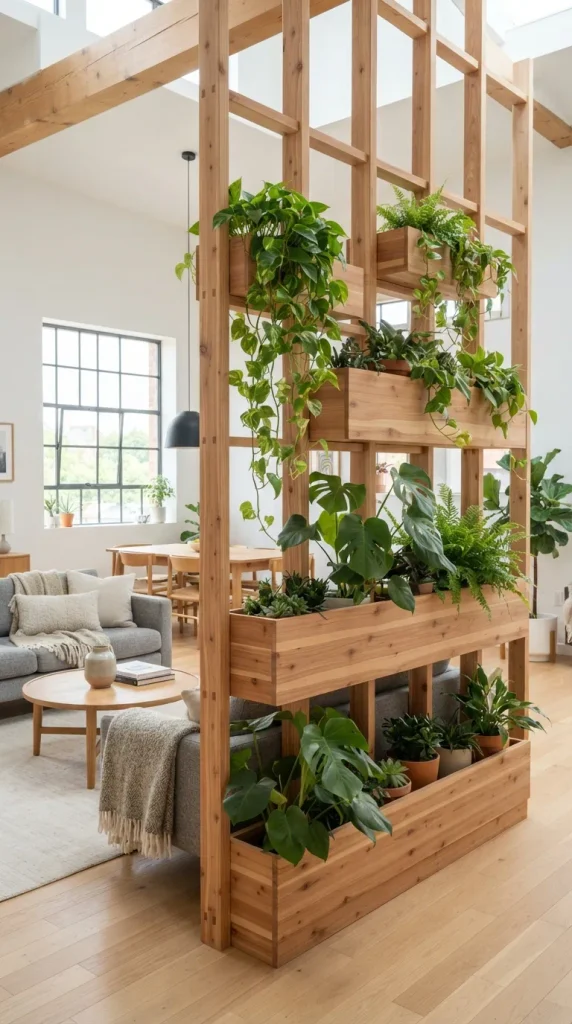
3. Biophilic Wood Partition with Integrated Planters
Introduction
Integrating living vegetation directly into interior woodwork bridges the gap between indoor architecture and the natural world. A biophilic partition wall divides space while cleaning the air and softening geometric interior lines.
What This Idea Means
This concept combines an open structural wood frame with built-in wooden planting troughs, floating shelves, or trellis slats designed to support trailing plants like pothos, philodendron, and monstera.
How to Make It
- Build a sturdy rectangular outer frame using 2×6 cedar, teak, or moisture-resistant treated hardwood.
- Build open planter boxes using matching lumber, lining the interior with waterproof rubber pond liners or inserting pre-formed plastic drip trays.
- Fasten horizontal planter boxes between the vertical uprights at staggered heights (e.g., knee height, waist height, and shoulder height).
- Install vertical or cross-hatch interior climbing dowels between the planter tiers.
- Fasten the completed structural unit securely into floor and ceiling anchors.
- Seal all exterior wood surfaces with a marine-grade water-resistant oil or polyurethane to protect against moisture from watering.
- Place potted plants inside the lined boxes, adding a top layer of preserved sheet moss to hide nursery pots.
Tips and Variations
- Lighting: Install full-spectrum LED grow light pucks concealed under upper shelving tiers to keep plants thriving in low-light rooms.
- Plant Selection: Combine upright snake plants on bottom tiers with cascading devil’s ivy on top tiers for layered density.
Materials & Tools Needed
- Cedar, white oak, or teak lumber (2×4, 2×6, and 1×8 stock)
- Heavy-duty pocket hole jig and 2-1/2 inch exterior-grade pocket screws
- Waterproof plastic planter liners or EPDM pond liner sheets
- Brad nailer, miter saw, and cordless driver
- Marine polyurethane or teak oil finish
- Moisture meter and spirit level