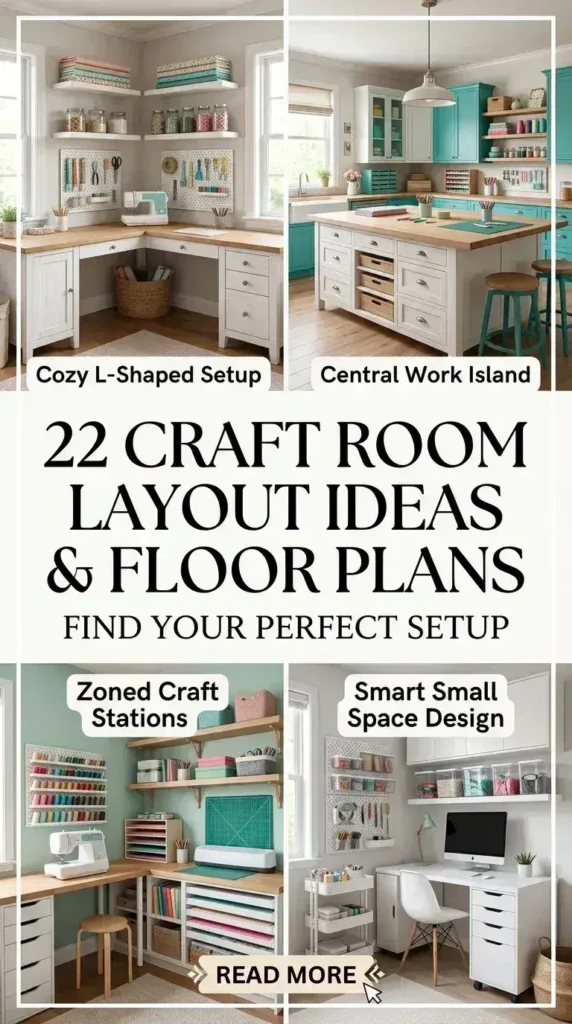
A well-designed craft room is not just about storage or aesthetics—it’s about creating a space that inspires creativity and efficiency. Whether you’re a scrapbooker, sewer, painter, or DIY enthusiast, the layout of your craft room can dramatically influence your productivity and enjoyment. Here, we explore 22 beautiful and functional craft room layout ideas with floor plans that combine style and practicality.
1. Open Concept Layout with Central Island
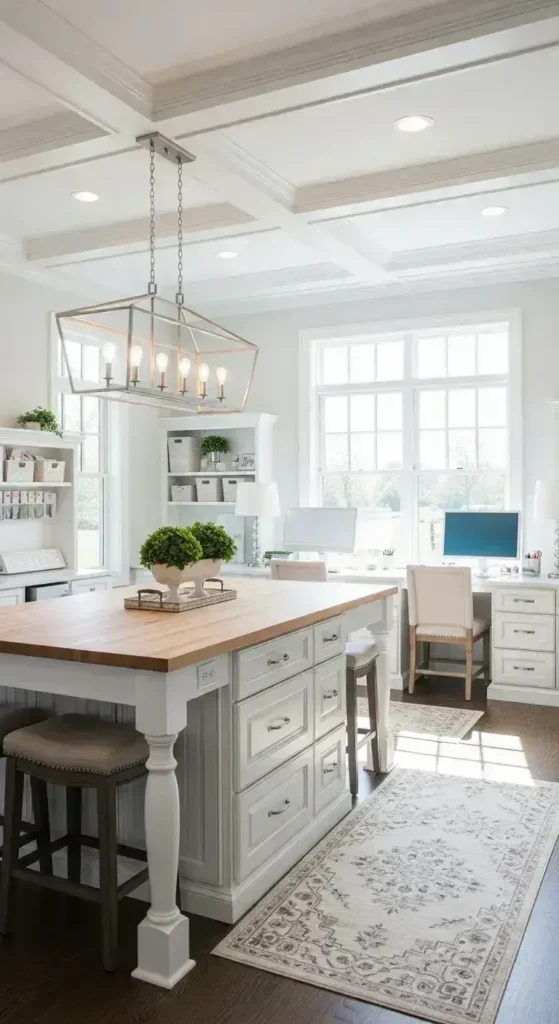
The open concept craft room layout is perfect for those who love to move around freely. Placing a central island in the middle of the room gives you a dedicated workspace while keeping supplies within easy reach. Surround the island with open shelves or cabinets along the walls for maximum storage. This layout works exceptionally well for collaborative projects, allowing friends or family to join without feeling cramped.
Tips: Ensure the island has drawers or shelves underneath for storing tools, cutting mats, and frequently used supplies. Add bar stools to convert part of the island into a casual seating area.
2. L-Shaped Layout for Corner Spaces
L-shaped layouts make the most of corner rooms and are ideal for small to medium spaces. This design places two work surfaces along adjacent walls, creating an efficient workflow for multiple projects. One side can be dedicated to messy crafts, while the other remains clean for digital design, planning, or sewing.
Tips: Install pegboards above the countertops to hang frequently used tools, and consider corner shelving to maximize vertical storage.

3. U-Shaped Layout for Maximum Storage
The U-shaped craft room layout surrounds you with work surfaces and storage on three sides, creating a highly organized and immersive workspace. This layout is perfect for serious crafters who need a lot of counter space and easy access to supplies. The center of the U can remain open for movement, or you can place a rolling cart for additional storage.
Tips: Use a mix of drawers, cabinets, and open shelving for different types of materials. A U-shaped layout works best in rooms that are at least 12×12 feet to prevent feeling cramped.

4. Studio-Style Layout with Multi-Functional Zones
A studio-style craft room separates areas for different types of projects, such as sewing, painting, and scrapbooking. Each zone has its own table, storage, and tools, creating a workflow that prevents cross-contamination and clutter. This layout is ideal for craft enthusiasts who juggle multiple hobbies.
Tips: Use rugs, color-coded storage bins, or lighting differences to visually separate zones. Keep rolling carts handy to move supplies between zones as needed.

5. Minimalist Layout with Wall-Mounted Storage
Minimalist craft rooms focus on simplicity and clean lines. This layout works best for small spaces and modern aesthetics. Wall-mounted cabinets, floating shelves, and slim countertops allow for maximum open floor space while keeping everything organized. A minimalist approach encourages creativity by reducing visual distractions.
Tips: Choose neutral colors and transparent storage bins for a sleek, airy feel. Add a large window or bright lighting to enhance the open look.

6. Gallery Layout with Display and Work Areas
For those who love to showcase their projects, a gallery layout combines work surfaces with display walls. Shelving, cubbies, and pegboards act as both storage and decor, allowing your creations to inspire you while you work. This layout transforms a craft room into a creative gallery where every finished piece has its place.
Tips: Mix open shelving with glass-front cabinets for a curated look. Use adjustable lighting to highlight displayed items.

7. Modular Layout with Movable Furniture
Modular layouts are designed for flexibility. Use rolling tables, stackable storage, and mobile carts to create a space that adapts to your current project. This is perfect for crafters who frequently change their workflow or need space for occasional large projects.
Tips: Include a foldable cutting table or a collapsible workbench. Consider wall-mounted storage to free up floor space when rearranging.

8. Uplifted Loft Layout for Vertical Crafting
A loft-style craft room takes advantage of vertical space, especially in rooms with high ceilings. Incorporate tall shelves, hanging racks, and mezzanine areas for additional storage or workspace. This layout not only maximizes every inch but also adds a unique architectural appeal to your craft room.
Tips: Ensure sturdy ladders or steps for loft access. Use baskets and labeled bins to keep items organized at higher levels.

9. Compact Layout for Small Spaces
Even the smallest rooms can be transformed into functional craft havens. A compact layout focuses on multi-purpose furniture, such as desks with built-in storage, fold-out tables, and wall-mounted organizers. Clever use of vertical space and corners can make a tiny room feel spacious and efficient.
Tips: Use pegboards, magnetic strips, and under-desk drawers to make the most of limited space. Mirrors can visually expand the room.

10. Open-Air Layout with Natural Light Focus
A craft room that emphasizes natural light creates an inviting and motivating environment. Large windows, skylights, or glass doors enhance the feeling of openness while reducing the need for artificial lighting. Combine this with a central workspace and surrounding storage to balance function and aesthetics.
Tips: Position your main table near the window for daylight illumination. Consider translucent storage containers to keep the light flowing freely.

Conclusion
Craft room layouts are as unique as the projects you create. From open-concept islands to compact, multi-functional designs, the key is to balance storage, workflow, and inspiration. The perfect layout not only makes your space efficient but also fuels creativity every time you step inside. With these 10 craft room floor plan ideas, you can create a functional, beautiful, and Pinterest-worthy workspace.

More ideas to come.
