6. Elegant Plaster Relief Wall Sculpture
Introduction
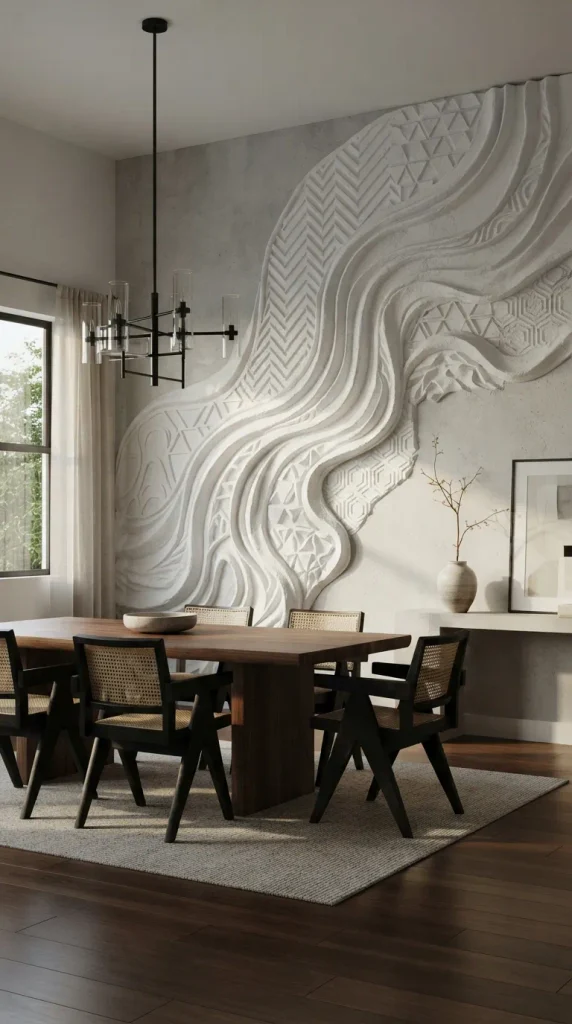
Subtle, tactile, and deeply sophisticated, textured plaster wall art introduces architectural sculpture into the dining room. It catches light and shadow dynamically throughout the day, creating a serene and luxurious atmosphere.
What This Idea Means
This style uses joint compound, plaster, or modeling paste applied thickly onto canvas or directly onto the wall to create raised, organic, monochromatic patterns reminiscent of ancient ruins or high-end modern galleries.
How to Make It
- Materials Needed: Heavy-duty primed canvas, lightweight joint compound, putty knives, notched trowels, a clean sponge, and white matte wall paint.
- Step-by-Step Instructions:
- Lay your canvas flat on a sturdy workbench or table.
- Scoop joint compound onto the canvas and use a putty knife or trowel to spread it evenly or create thick, sculptural waves and ridges.
- Use the teeth of a notched trowel to drag through the wet compound, creating structured geometric lines or organic fan motifs.
- Allow the plaster to dry completely for 48 hours until it hardens and turns a bright matte white.
- Touch up any sharp edges with fine-grit sandpaper if necessary.
- Mount the textural masterpiece securely on your dining room wall.
Tips and Variations
- Monochrome Tint: Mix a tiny drop of raw umber or beige acrylic paint into the plaster before application for a warm, organic limestone hue.
- Direct Wall Relief: Apply the plaster directly onto a designated section of the dining room wall framed by subtle molding strips.