Transforming everyday outdoor and indoor spaces into enchanting sanctuaries often relies on the magic of vintage accents mixed with lush botanicals. Among the most charming decor trends is the transformation of classic bird cages into thriving botanical displays. The contrast between rustic, weathered iron or polished brass wire and the vibrant, cascading greenery of trailing plants creates an immediate focal point that captures the eye and elevates any environment.
Bird cage planters bridge the gap between architectural structure and organic fluidity. They introduce vertical interest, making them ideal for small patios, cozy balconies, expansive gardens, or bohemian indoor living rooms. Whether sourced from a local flea market, a modern home goods store, or crafted from scratch, these statement pieces offer endless possibilities for creative self-expression.
The Allure of Bird Cage Planters in Modern Decor
Integrating bird cages into home and garden design taps into the enduring appeal of vintage charm and repurposed decor. Unlike traditional clay pots or standard hanging baskets, bird cages provide a built-in frame that naturally supports winding vines, cascading succulents, and delicate floral arrangements. The physical bars of the cage offer structural guidance, allowing plants to weave in and out, creating a dynamic, living sculpture that evolves over time.
This style of gardening aligns effortlessly with cottagecore, bohemian, rustic farmhouse, and even modern minimalist aesthetics depending on the finish of the cage and the choice of foliage. A distressed white-painted cage evokes a breezy coastal or French country feel, while a matte black or polished copper cage leans toward industrial elegance or contemporary chic.
20 Aesthetic Bird Cage Planter Ideas
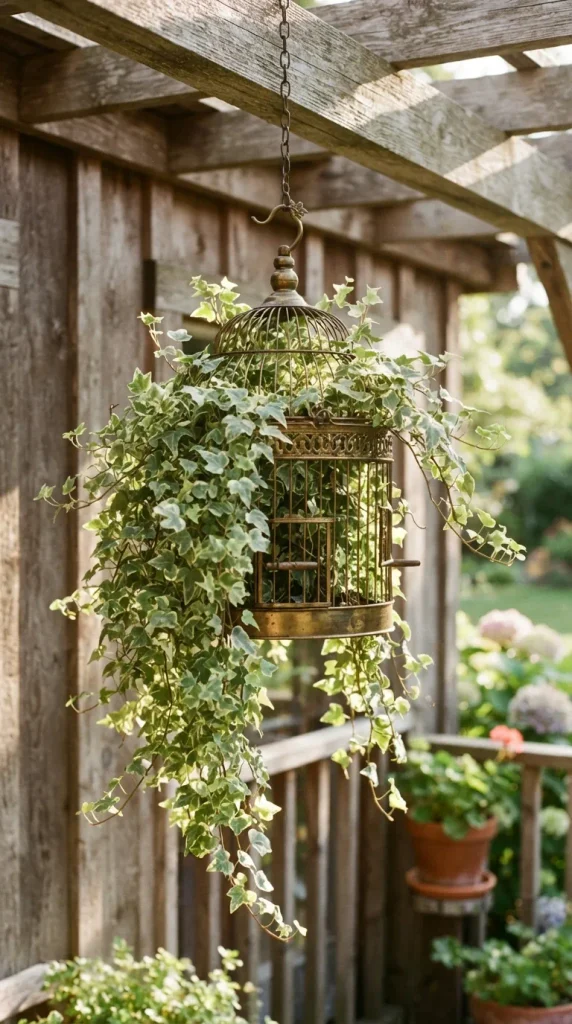
1. Cascading English Ivy and Brass Cage
A polished brass bird cage paired with deeply lobed, variegated English Ivy creates an aura of timeless sophistication. The golden metallic sheen of the brass reflects natural sunlight, highlighting the intricate patterning of the ivy leaves as they spill gracefully through the open wire framework.
- How to Make It: Line the bottom base tray of the brass cage with moisture-retaining sphagnum moss. Plant two small-pot English Ivy varieties directly into the secured moss-and-soil base, and gently guide the longest runners outward through the cage bars, allowing them to drape downward.
- Tips and Variations: Mist the foliage daily to maintain humidity. Substitute the ivy with creeping fig (Ficus pumila) for a tighter, more textured leaf pattern.
2. Succulent Desert Haven in a Distressed Teal Cage
A weathered, distressed teal-painted bird cage serves as an unexpected, vibrant home for a diverse collection of architectural succulents, bringing a touch of arid beauty to damp or shaded microclimates.
- How to Make It: Replace the solid base floor of the cage with a shallow, well-draining terracotta saucer filled with a specialized cactus and succulent potting mix. Arrange a mix of rosette-forming Echeveria, trailing Burro’s Tail, and upright Jade cuttings across the surface.
- Tips and Variations: Top the soil with white river rocks or crushed sea glass to enhance the coastal-desert aesthetic. Ensure the cage hangs in a spot receiving at least six hours of bright, indirect sunlight.

3. Romantic Rose and Trailing Jasmine Sanctuary
Combining miniature climbing roses with the intoxicating fragrance of star jasmine inside a wrought-iron dome-topped cage transforms a simple patio corner into a romantic fairy-tale nook.
- How to Make It: Secure a coco-coir liner tightly inside the lower half of the cage. Plant a dwarf patio rose variety as the central anchor, flanked by fast-climbing white jasmine on either side. Weave the young jasmine stems vertically along the iron bars.
- Tips and Variations: Feed the plants a bloom-boosting organic fertilizer every two weeks during the growing season to maximize flower production. Prune back spent rose blooms regularly to encourage continuous flowering.

4. Fern Grotto in a Matte Black Industrial Cage
For a moody, woodland-inspired look, a sleek matte black wire cage packed with a variety of lush, feathery ferns creates a dramatic botanical display reminiscent of an enchanted forest floor.
- How to Make It: Line the interior base and lower walls with thick dark sheet moss. Plant a combination of Boston Ferns, Maidenhair Ferns, and Rabbit’s Foot Fern, letting the furry rhizomes peek through the wire gaps.
- Tips and Variations: Keep the moss consistently damp. Hang this setup in a humid bathroom or a covered porch protected from harsh afternoon winds.

5. Pastel Floral Fairy Tale with Pansies and Petal Pink Cage
A soft, blush pink-painted cage filled with cool-season pansies, violas, and trailing sweet alyssum introduces a delightful pop of cheerful color to spring and autumn entryways.
- How to Make It: Fit a plastic saucer snug inside the bottom tier of the cage and fill it with nutrient-rich potting compost. Plant closely spaced pansies and violas so they create a dense, mounding cushion of color that spills over the rim.
- Tips and Variations: Deadhead faded flowers promptly to extend the blooming season well into the cooler months. Mix in miniature white trailing lobelia for added textural depth.

6. Culinary Herb Haven in a Galvanized Steel Cage
Combining aesthetic beauty with practical utility, a galvanized steel wire bird cage turns into a stunning, aromatic hanging kitchen garden featuring culinary herbs.
- How to Make It: Line the wire base with a breathable burlap fabric to hold the soil while maintaining proper drainage. Plant compact varieties of trailing thyme, Greek oregano, flat-leaf parsley, and sweet basil.
- Tips and Variations: Position this herb cage right outside your kitchen window or on a sunny balcony for easy snipping while cooking. Ensure the soil dries out slightly between waterings to prevent root rot.


7. Tropical Paradise with Miniature Monstera and Ferns
Transport your living space to a tropical rainforest by utilizing a large, dome-topped vintage brass cage to house humidity-loving tropical foliage plants.
- How to Make It: Build a rich, chunky soil mixture using orchid bark, perlite, and peat moss inside a hidden plastic basin resting in the cage bottom. Plant a young Monstera adansonii (Swiss Cheese Vine) and allow its fenestrated leaves to climb up the central ring of the cage.
- Tips and Variations: Mist the leaves frequently with filtered water. Add a small layer of live cushion moss over the soil surface to lock in moisture and elevate the jungle aesthetic.
8. Autumn Harvest Display with Ornamental Kale and Pansies
Celebrate the shifting seasons by transforming a rustic copper-patina cage into an eye-catching autumn display featuring textured ornamental kale and rich jewel-toned flowers.
- How to Make It: Fill the base container with a balanced, organic potting mix. Plant a central ruffled purple ornamental kale surrounded by bronze-shaded chrysanthemums and trailing variegated ivy.
- Tips and Variations: Keep the arrangement in full sun to maintain the vibrant purple and white coloration of the kale leaves. Replace with spring flowers once winter frosts arrive.
9. Moonlit White Garden with Trailing Silver Dichondra
Create an ethereal nighttime display using a stark white-painted wire cage overflowing with silver-foliage plants that seem to glow under evening moonlight.
- How to Make It: Line the base with white sphagnum moss. Plant silver-leafed Dichondra argentea (‘Silver Falls’) alongside white trailing petunias and dusty miller.
- Tips and Variations: Hang this piece near a patio seating area or bedroom window where it can catch the evening light and add a serene, calming ambiance.
10. Pollinator Magnet with Wildflower Meadow Cage
Support local bees and butterflies by packing a rustic wooden-framed bird cage with a dense mix of compact, nectar-rich wildflowers.
- How to Make It: Secure a biodegradable planting box inside the bottom of the cage. Sow seeds or plant young starts of dwarf zinnias, sweet alyssum, French marigolds, and creeping phlox.
- Tips and Variations: Place the cage in an open garden area where pollinators have clear flight access. Avoid chemical pesticides to keep the visiting bees safe.
11. Minimalist Air Plant and Driftwood Artistic Cage
Embrace a modern, low-maintenance aesthetic by suspending a geometric black wire cage containing structural air plants (Tillandsia) arranged around weathered coastal driftwood.
- How to Make It: Skip the soil entirely. Secure pieces of aged driftwood inside the cage using clear fishing line, and tuck various species of air plants—like Tillandsia xerographica and Ionantha—into the crevices of the wood and wire frame.
- Tips and Variations: Submerge the air plants in room-temperature water for twenty minutes once a week, shake off excess moisture, and return them to the cage.
12. Moody Gothic Elegance with Black Mondo Grass and Dark Petunias
Craft a dramatic, gothic-inspired masterpiece using an antique dark iron cage filled with deep purple-black foliage and rich, velvety blooms.
- How to Make It: Line the cage base with dark black cocoa fiber. Plant contrasting dark Black Mondo Grass (Ophiopogon planiscapus ‘Nigrescens’) alongside deep burgundy petunias and trailing sweet potato vine.
- Tips and Variations: Pair this dark aesthetic with light-colored background walls to make the deep tones pop visually.
13. Whimsical Fairy Garden with Miniature Houses and Moss
Turn a medium-sized decorative cage into a magical miniature landscape complete with tiny moss-covered hills, miniature stepping stones, and a small wooden cabin.
- How to Make It: Fill the bottom tray with a rich, dark potting mix. Shape rolling hills using sheet moss, plant tiny creeping thyme as ground cover, and place a miniature resin or wooden fairy cottage in the center.
- Tips and Variations: Mist daily to keep the moss vibrant and green. This design makes a wonderful tabletop centerpiece for sunrooms or covered porches.
14. Citrus and Sunburst Display with Miniature Calamondin Orange
Introduce a burst of Mediterranean warmth by housing a miniature potted calamondin citrus tree inside an open-topped decorative metal bird cage.
- How to Make It: Choose a compact dwarf citrus tree that fits comfortably within the height of the cage. Plant it in a sturdy ceramic pot that sits securely inside the base frame, allowing the citrus branches and fragrant white blossoms to extend upward through the upper dome.
- Tips and Variations: Feed with citrus-specific fertilizer monthly. Ensure the tree receives full, direct sunlight for optimal fruit development.


15. Coastal Driftwood and Sea-Glass Greenery Cage
Bring the relaxing atmosphere of the seaside indoors by combining beach-combed driftwood, air plants, and trailing succulent strands inside a weathered wire cage.
- How to Make It: Arrange weathered pieces of gray driftwood at the base of the cage. Add clumps of string of pearls (Senecio rowleyanus) to mimic cascading sea foam winding through the wooden textures.
- Tips and Variations: Incorporate smooth sea glass pieces and small decorative starfish around the base for an authentic coastal touch.
16. Spring Bulb Awakening with Miniature Daffodils and Muscari
Welcome the arrival of warmer weather by forcing spring blooming bulbs inside a classic wire bird cage for an uplifting seasonal display.
- How to Make It: Plant pre-chilled bulbs of miniature Tete-a-Tete daffodils and blue grape hyacinths (Muscari) close together in a shallow tray placed inside the cage base. Cover the soil with green moss for a clean finish.
- Tips and Variations: Once the blooms fade, transplant the bulbs directly into your outdoor garden bed to enjoy them again next spring.
17. Edible Strawberry Cascade Cage
Combine fresh fruit production with charming aesthetics by planting everbearing trailing strawberries inside an elevated hanging bird cage.
- How to Make It: Line the wire cage with a coco-fiber liner. Plant alpine or trailing strawberry runners around the perimeter, allowing the fruit-bearing stems and white blossoms to drape outward over the sides.
- Tips and Variations: Protect ripening strawberries from garden birds by hanging the cage in a secure location or draping lightweight netting over the top tier.
18. Monochromatic Greenery with Pothos and Philodendron
Keep things effortlessly chic and lush with a monochromatic green display featuring various shades and leaf shapes of trailing aroids.
- How to Make It: Secure a plastic nursery liner inside the cage base. Plant a mix of Neon Pothos, Heartleaf Philodendron, and Satin Pothos (Scindapsus pictus), letting their vibrant green and silver-flecked vines interweave as they cascade downward.
- Tips and Variations: Trim the vines periodically to encourage bushier growth at the crown of the plant. This low-maintenance option thrives in medium indoor light.
19. Glowing Evening Oasis with Integrated Fairy Lights
Marry living botany with ambient lighting by weaving warm white micro-fairy lights through the wire framework alongside trailing greenery.
- How to Make It: Wrap a battery-operated, waterproof copper wire fairy light string securely around the vertical bars of the cage, weaving it carefully between the stems of a cascading spider plant or wandering dude (Tradescantia).
- Tips and Variations: Use a timer function on the fairy lights so they automatically illuminate your outdoor patio or living room every evening at dusk.
20. Festive Holiday Evergreen and Berry Cage
Transition your bird cage decor into the winter holiday season with fragrant evergreen sprigs, winterberry branches, and frosted pinecones.
- How to Make It: Anchor fresh-cut noble fir, cedar, and bright red winterberry branches into moist floral foam secured inside the cage base. Add a velvet plaid ribbon bow to the top hanging ring for a classic holiday finish.
- Tips and Variations: Mist the evergreen stems regularly to keep them fresh and fragrant throughout the winter holiday festivities.
Essential Tips for Success
- Weight Distribution: Always ensure that your hanging apparatus and ceiling hook can support the combined weight of the metal cage, wet soil, and mature plants.
- Drainage Solutions: Since bird cages lack traditional drainage holes, always plant inside a smaller inner plastic pot or saucer placed within the cage base to catch excess water and protect your floors or furniture.
- Pruning Maintenance: Regularly trim vines that grow too woody or block the open aesthetic of the cage frame to keep the display looking intentional and pristine.
Future Additions
More ideas to come in future addition.


