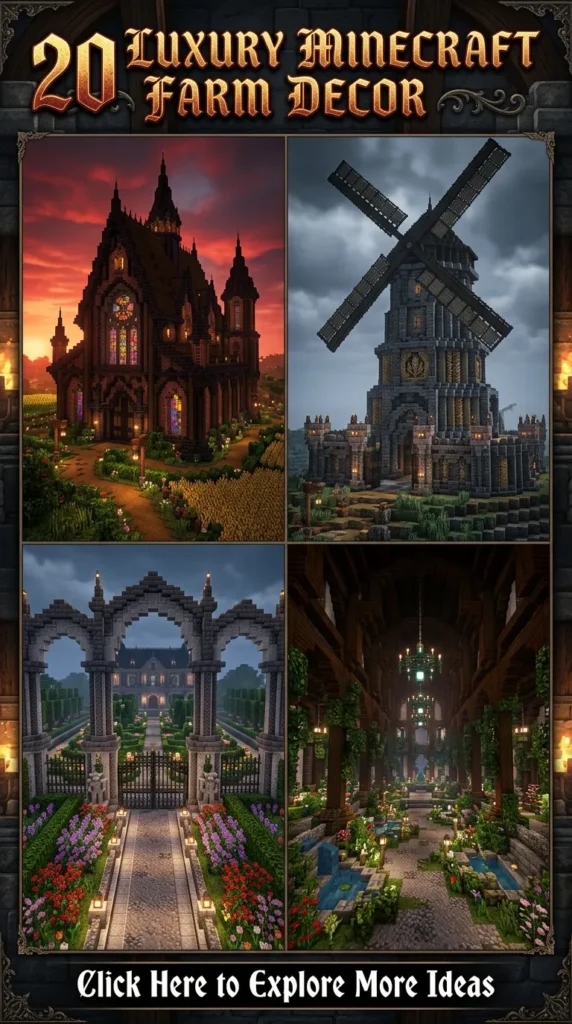
Farming in Minecraft is no longer just about harvesting wheat for survival bread; it has evolved into a sophisticated art form where agriculture meets high-end architectural design. For players looking to curate breathtaking aesthetic boards and inspire builders across digital spaces, designing a luxury farm combines rustic charm with immaculate elegance. This comprehensive guide explores twenty luxury Minecraft farm decor ideas designed to captivate the imagination, featuring detailed breakdowns, step-by-step construction insights, material checklists, and curated variations to elevate your world.
1. Grand Greenhouse Conservatory
Introduction
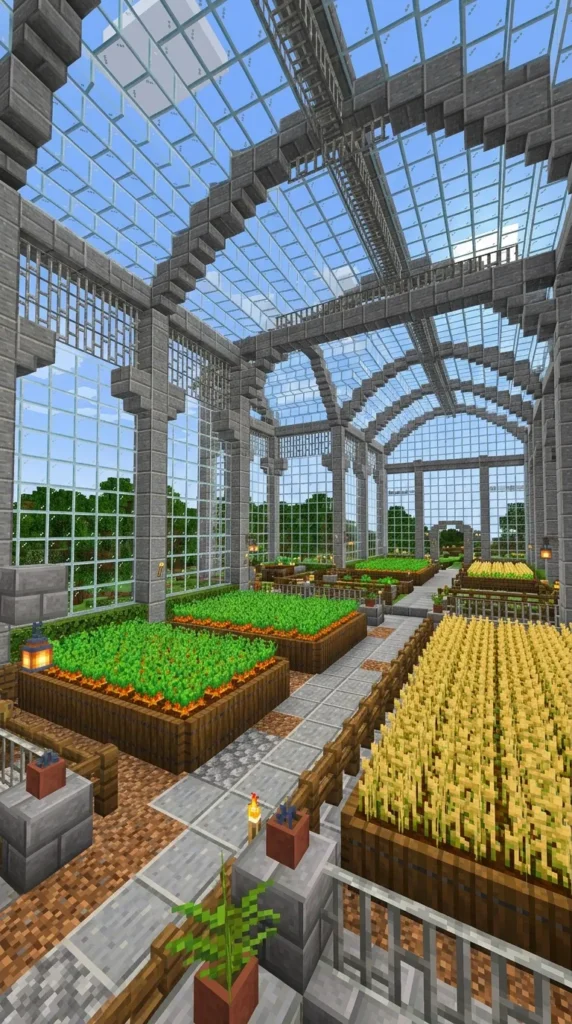
A magnificent structure of shimmering glass and iron framing, a grand greenhouse conservatory transforms standard crop cultivation into a botanical masterpiece. Standing proudly amidst rolling green fields, it protects delicate exotic plants while offering a breathtaking aesthetic centerpiece.
What This Idea Means
This decor concept symbolizes refinement, scientific curiosity, and opulent agricultural luxury. It bridges the gap between raw outdoor farming and sophisticated indoor estate living, creating a year-round paradise for greenery.
How to Make It
- Step 1: Structural Framework. Erect a soaring rectangular framework using polished andesite, iron bars, and smooth stone blocks to form the greenhouse walls.
- Step 2: Glass Enclosure. Fill the entire ceiling and wall spans with clear glass blocks and panes to maximize natural sunlight penetration.
- Step 3: Raised Garden Beds. Construct tiered garden beds inside using dark oak slabs, filled with rich farmland, glowing moss, and orderly rows of carrots, potatoes, and wheat.
- Step 4: Interior Water Features. Add a central stone brick fountain connected to running water channels that keep the soil constantly hydrated.
Tips and Variations
- Use tinted glass for accent roof panels to create soft, moody interior shading.
- Hang glow berries from the ceiling framework to provide a magical evening glow.
Needs to Make That Thing
- Glass Block
- Iron Bars
- Polished Andesite
- Dark Oak Slab
- Farmland
- Water Bucket
2. Cherry Blossom Orchard Pavilion
Introduction
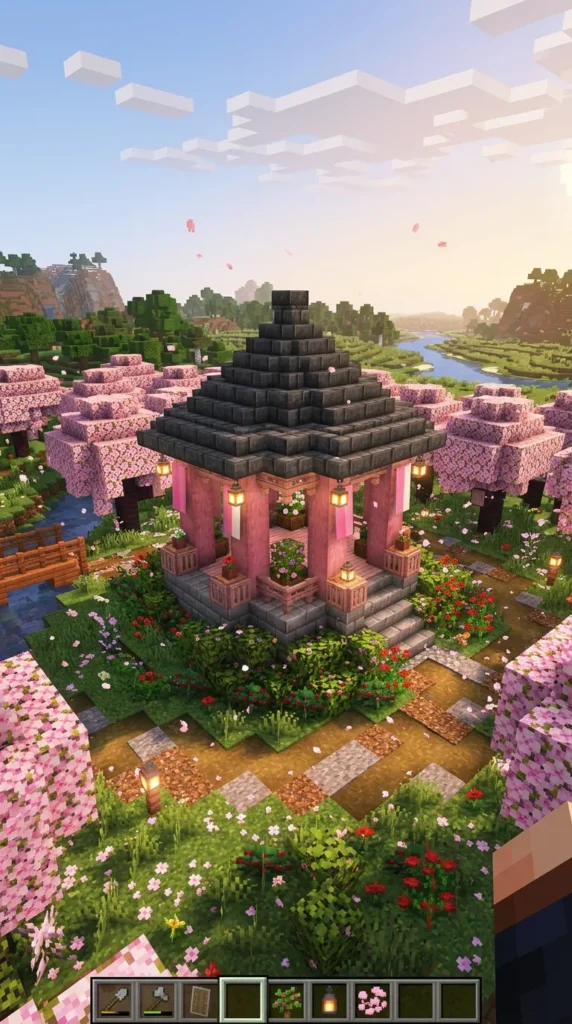
Bathed in soft pink hues and falling petals, a cherry blossom orchard pavilion creates an ethereal, romantic sanctuary for harvesting sweet berries and tending delicate flora.
What This Idea Means
This idea embodies tranquility, Eastern-inspired elegance, and serene pastoral beauty. It offers a peaceful retreat from intense mining expeditions into a peaceful, petal-strewn world.
How to Make It
- Step 1: Stone Pathway Foundation. Lay down winding pathways using smooth stone slabs, polished diorite, and coarse dirt.
- Step 2: Planting Trees. Cultivate rows of custom cherry trees using stripped cherry logs and lush cherry leaves.
- Step 3: The Pavilion Structure. Build a traditional open-air gazebo using cherry wood pillars and deepslate tile pagoda roofs.
- Step 4: Ground Landscaping. Scatter pink petals generously across the grass and surround the tree trunks with sweet berry bushes.
Tips and Variations
- Add bamboo fences and hanging lanterns along the pathways for evening strolls.
- Use pink terracotta blocks to create subtle paved terrace rings around the trees.
Needs to Make That Thing
- Stripped Cherry Log
- Cherry Leaves
- Pink Petals
- Deepslate Tile Stairs
- Bamboo Fence
- Sweet Berry Bush
3. Luxury Vineyard and Wine Cellar
Introduction
Perched on a sun-drenched hillside overlooking rolling green valleys, a luxury vineyard features cascading grapevines, rustic oak barrels, and an underground tasting cellar.
What This Idea Means
This decor style celebrates old-world European charm, artisanal craftsmanship, and leisurely wealth. It brings an aura of sophisticated vintage estate living to your agricultural builds.
How to Make It
- Step 1: Terraced Hillside Slopes. Carve multi-tiered agricultural steps into a sunny hill using stone brick retaining walls.
- Step 2: Trellis Construction. Build intricate overhead trellises using dark oak fences and leaves to simulate sprawling grapevines.
- Step 3: The Wine Press Station. Construct an outdoor processing area using cauldrons, grindstones, and barrels arranged on stone slabs.
- Step 4: Cellar Entrance. Excavate an underground stone archway leading into a candle-lit cellar lined with chest storage and wine racks.
Tips and Variations
- Use purple stained glass panes suspended from fences to simulate ripe hanging grapes.
- Add cobblestone stairs and pillars for an authentic weathered stone aesthetic.
Needs to Make That Thing
- Dark Oak Fence
- Oak Leaves
- Barrels
- Cauldron
- Stone Bricks
- Candle
4. Koi Pond Produce Market Square
Introduction
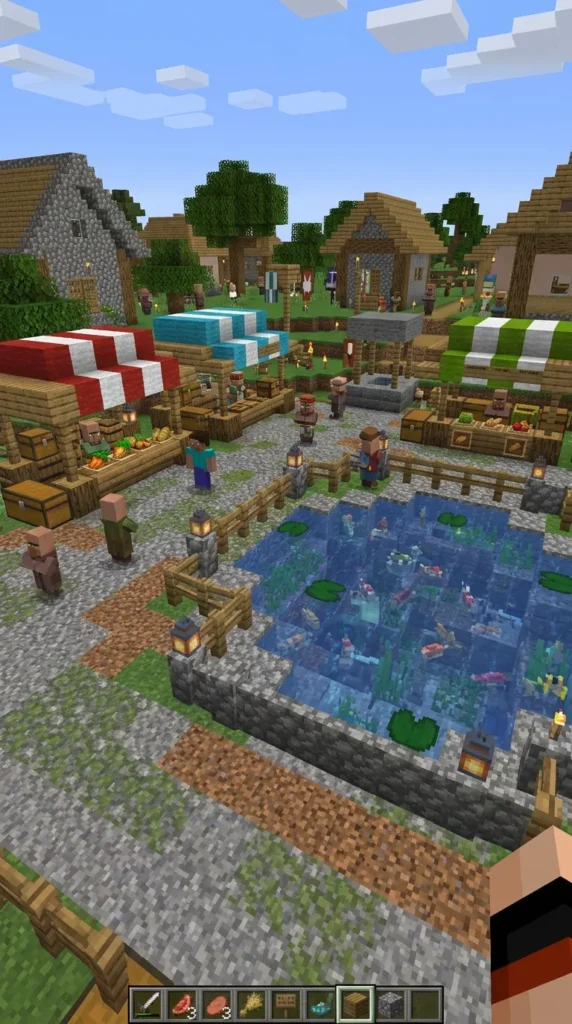
Vibrant, bustling, and culturally rich, a koi pond produce market square combines agricultural trade with tranquil aquatic landscaping and colorful canopies.
What This Idea Means
This idea captures community commerce, lively village heritage, and harmonious water management. It turns a standard crop harvest into an interactive marketplace experience.
How to Make It
- Step 1: Water Basin Excavation. Dig out a winding stone-lined pond stocked with live tropical fish and glowing sea pickles.
- Step 2: Market Stalls. Build charming wooden market stalls around the pond using spruce logs, colorful wool awnings, and item frames.
- Step 3: Produce Displays. Place composters, barrels, and item frames displaying golden carrots, melons, and pumpkins on display counters.
- Step 4: Stone Bridges. Connect the market squares using elegant arched stone brick bridges draped in weeping vines.
Tips and Variations
- Use cyan and orange wool for vibrant awnings that catch the eye.
- Tether horses or donkeys to fence posts near the market entrance.
Needs to Make That Thing
- Cobblestone
- Spruce Log
- Colored Wool
- Barrels
- Tropical Fish Bucket
- Item Frame
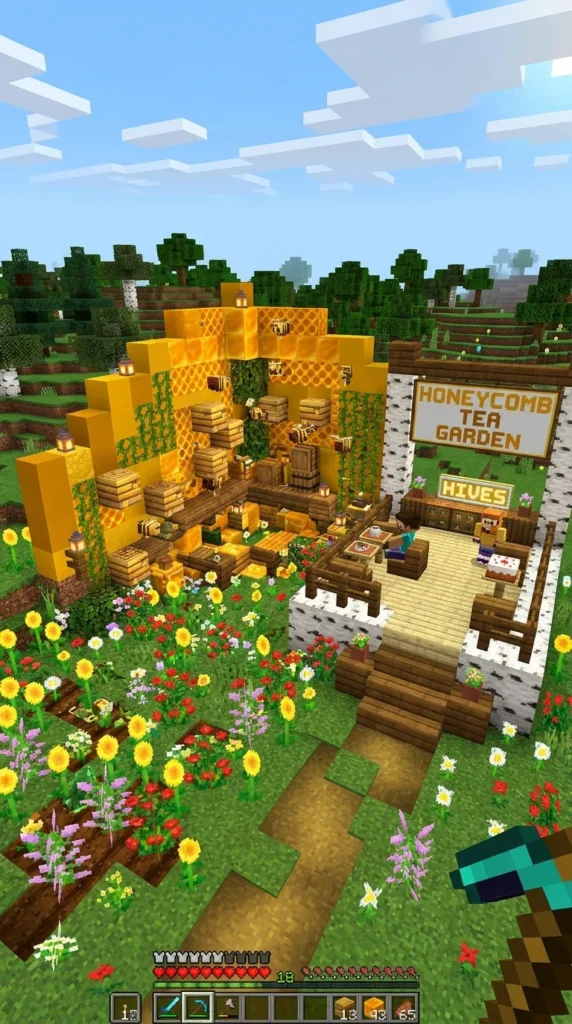
5. Honeycomb Apiary and Tea Terrace
Introduction
Charming, sweet, and bursting with cheerful yellow warmth, a honeycomb apiary and tea terrace celebrates pollination, honey production, and relaxing outdoor dining.
What This Idea Means
This decor concept represents sweetness, hard work, and eco-friendly luxury. The cheerful golden palette brings instant joy and aesthetic warmth to any landscape.
How to Make It
- Step 1: Hexagonal Apiary Base. Build structural walls using yellow terracotta, honey blocks, and stripped oak wood.
- Step 2: Functional Beehives. Integrate working beehives directly into the cottage walls surrounded by blooming flower gardens.
- Step 3: Tea Terrace Deck. Construct an elevated outdoor patio using birch planks and fences, equipped with table and chair seating.
- Step 4: Floral Landscaping. Plant vast fields of cornflowers, sunflowers, and tulips to keep bees constantly buzzing.
Tips and Variations
- Use yellow stained glass window panes to filter warm amber light inside the apiary.
- Add flower pots on every windowsill filled with your favorite blossoms.
Needs to Make That Thing
- Yellow Terracotta
- Honey Block
- Beehive
- Birch Planks
- Sunflowers
- Flower Pot
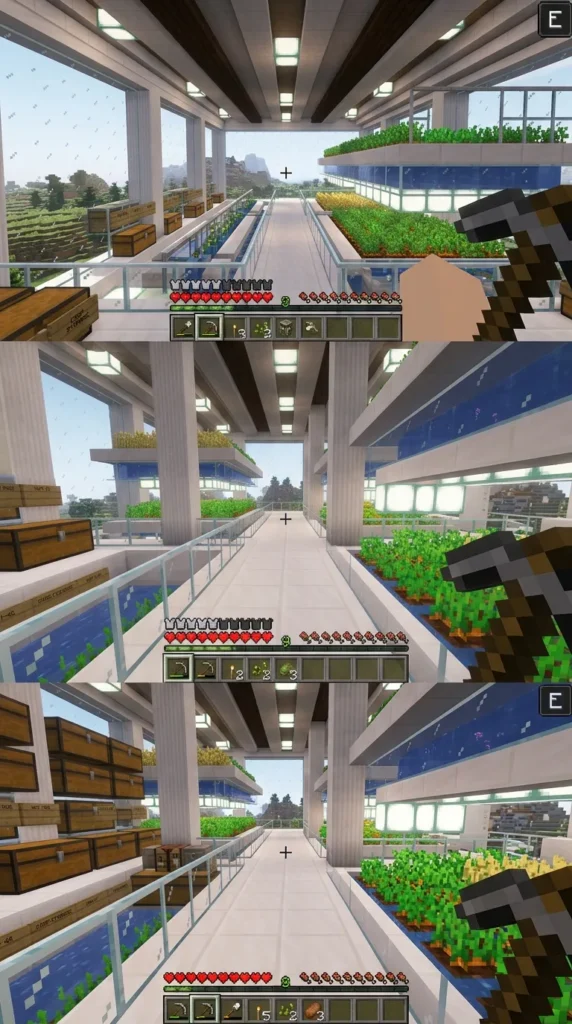
6. Modern Minimalist Hydroponic Farm
Introduction
Sleek, futuristic, and impeccably organized, a modern minimalist hydroponic farm brings high-tech agricultural design to contemporary urban estates.
What This Idea Means
This style represents technological innovation, clean lines, and efficiency. It contrasts raw organic crops with ultra-modern architectural materials like quartz and concrete.
How to Make It
- Step 1: Concrete Framework. Build a bold geometric structure using smooth quartz blocks and white concrete pillars.
- Step 2: Tiered Water Troughs. Construct linear water channels using smooth stone slabs where crops grow in pristine, orderly rows.
- Step 3: Integrated Lighting. Hide sea lanterns beneath glass floor panels to cast a futuristic upward glow across the crops.
- Step 4: Glass Walls. Enclose the entire facility in clear glass panes to offer unobstructed views of the surrounding manicured grounds.
Tips and Variations
- Use black concrete for accent floor panels to create a striking monochrome contrast.
- Add iron trapdoors along the water channels for industrial detailing.
Needs to Make That Thing
- Smooth Quartz Block
- White Concrete
- Glass Pane
- Sea Lantern
- Stone Slab
- Water Bucket
7. Rustic Autumn Harvest Courtyard
Introduction
Surrounded by golden wheat fields and glowing jack-o’-lanterns, a rustic autumn harvest courtyard celebrates the warm, abundant aesthetic of the fall season.
What This Idea Means
It embodies comfort, agricultural bounty, and traditional country living. The rich color palette of oranges, browns, and ambers creates an instantly cozy atmosphere.
How to Make It
- Step 1: Mud Brick Patios. Lay out a sprawling courtyard floor plan using mud bricks, cobblestone, and coarse dirt.
- Step 2: Hay Bale Stacks. Stack hay bales against weathered wooden walls and surround the courtyard with pumpkins and melons.
- Step 3: Timber Pergola. Erect heavy wooden framing using stripped oak logs overhead, draped with glowing orange terracotta accents.
- Step 4: Scarecrow Sentinels. Construct detailed scarecrows using fence posts, hay bales, and carved pumpkins.
Tips and Variations
- Plant giant pumpkins using carved pumpkin and melon blocks.
- Hang lanterns from iron chains suspended from the wooden pergola beams.
Needs to Make That Thing
- Mud Bricks
- Hay Bale
- Stripped Oak Log
- Pumpkin
- Orange Terracotta
- Lantern


8. Steampunk Mechanical Grain Silo
Introduction
Towering high into the sky with spinning gears, copper piping, and iron grates, a steampunk mechanical grain silo combines industrial engineering with large-scale farming.
What This Idea Means
This build celebrates inventive genius, heavy machinery, and functional agricultural efficiency. It tells the story of an automated, gear-driven farming empire.
How to Make It
- Step 1: Cylindrical Tower. Construct a massive vertical grain silo using smooth stone, cut copper blocks, and brick walls.
- Step 2: Copper Piping. Use grindstones, hoppers, and iron bars running up the exterior walls to simulate grain transfer pipes.
- Step 3: Mechanical Roof. Cap the silo with a domed roof made of copper grates, topped with a lightning rod.
- Step 4: Processing Yard. Surround the base with hoppers, blast furnaces, and chests designed to collect harvested wheat.
Tips and Variations
- Allow the copper to oxidize naturally for an authentic aged patina finish.
- Add scaffolding towers and chains around the silo for maintenance aesthetics.
Needs to Make That Thing
- Smooth Stone
- Cut Copper
- Grindstone
- Hopper
- Iron Bars
- Lightning Rod
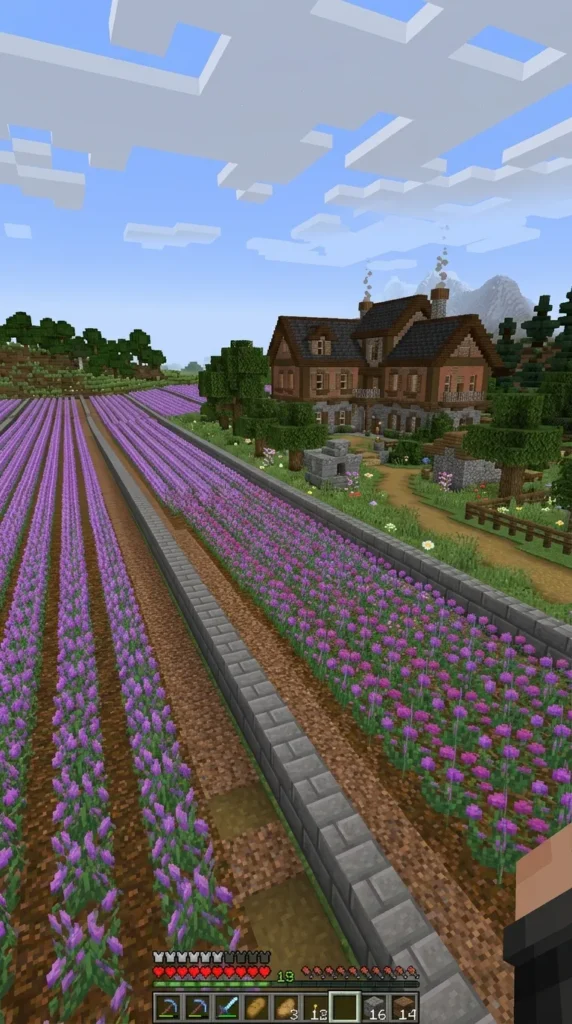
9. Elegant French Country Lavender Field
Introduction
Stretching toward the horizon in endless rows of vibrant purple, a French country lavender field offers breathtaking romance and fragrant agricultural beauty.
What This Idea Means
This decor idea represents classic European romance, serene luxury, and meticulous estate landscaping. It provides an unmatched visual feast of purple hues.
How to Make It
- Step 1: Gridded Farmland. Cultivate long, perfectly straight rows of farmland across a gently rolling countryside slope.
- Step 2: Planting Lavender. Fill every row densely with allium flowers and purple tinted blocks to simulate blooming lavender.
- Step 3: Stone Estate Wall. Enclose the field with low stone brick walls and wrought iron fence gates.
- Step 4: The Stone Villa. Build a charming French country stone house nearby with dark oak shutters and flower boxes.
Tips and Variations
- Use powdered snow blocks or light blue concrete powder for accent contrast paths.
- Add stone benches and gazebos nestled within the lavender rows.
Needs to Make That Thing
- Farmland
- Allium Flower
- Stone Bricks
- Wrought Iron Fence
- Dark Oak Log
- Flower Box
10. Tropical Island Spice and Fruit Oasis
Introduction
Surrounded by turquoise ocean water and golden sand beaches, a tropical island spice and fruit oasis cultivates exotic crops under swaying palm trees.
What This Idea Means
It evokes the relaxed, sun-drenched vibe of a tropical vacation paradise. It focuses on exotic produce like melons, cocoa beans, and sugar cane.
How to Make It
- Step 1: Sand Terraces. Build raised garden beds using smooth sandstone and coarse dirt along a tropical beach shoreline.
- Step 2: Palm Tree Groves. Cultivate custom palm trees using jungle logs and jungle leaves, interspersed with towering cocoa bean trunks.
- Step 3: Bamboo Irrigation. Construct flowing water streams lined with bamboo stalks and sugarcane farms.
- Step 4: Beach Hut Storage. Build an open-air thatched-roof beach hut to store harvested tropical fruits in barrels.
Tips and Variations
- Place glowing sea pickles in the shallow water surrounding the farm for night illumination.
- Hang tropical fish items and coral fans around the porch.
Needs to Make That Thing
- Smooth Sandstone
- Jungle Log
- Jungle Leaves
- Bamboo
- Sugarcane
- Barrels
11. Dark Academia Herbology Greenhouse
Introduction
Moody, mysterious, and filled with rare medicinal plants, a dark academia herbology greenhouse evokes the secretive atmosphere of ancient magical academies.
What This Idea Means
This style represents the pursuit of hidden botanical knowledge, alchemy, and timeless scholarly elegance. It relies on deep wood tones and moody lighting.
How to Make It
- Step 1: Stone Arch Framework. Build a vaulted greenhouse structure using cracked stone bricks, tuff, and basalt blocks.
- Step 2: Tinted Glass Enclosure. Use tinted glass blocks for the roof and walls to cast dramatic, moody shadows inside.
- Step 3: Herbology Benches. Arrange brewing stands, flower pots, lectors, and composters across dark oak workbench tiers.
- Step 4: Magical Flora. Cultivate nether warts, glowing lichen, mushrooms, and spore blossoms in specialized garden boxes.
Tips and Variations
- Hang soul lanterns from iron chains to cast an eerie, intellectual glow.
- Use bookshelves lining the interior walls to store botanical research tomes.
Needs to Make That Thing
- Cracked Stone Bricks
- Tinted Glass
- Dark Oak Stairs
- Brewing Stand
- Soul Lantern
- Nether Wart
12. Floating Sky Garden Terraces
Introduction
Soaring high above the world in the upper atmosphere, floating sky garden terraces cultivate crops on billowing white wool and quartz agricultural islands.
What This Idea Means
It represents ultimate freedom, transcendence, and dreamy fantasy architecture. Being untethered from the earth offers absolute peace and panoramic agricultural views.
How to Make It
- Step 1: Cloud Foundation. Build organic, floating island bases using white wool, white concrete powder, and smooth quartz.
- Step 2: Terraced Farmland. Carve stepped agricultural terraces into the floating islands filled with golden wheat and carrots.
- Step 3: Cascading Waterfalls. Let water streams cascade downward from the floating island edges into empty air below.
- Step 4: Celestial Lighting. Use end rods and sea lanterns around the garden paths to mimic twinkling stars at night.
Tips and Variations
- Build high enough that clouds pass right through your floating agricultural base.
- Add glowing beacons shooting upward beams of light from the center terrace.
Needs to Make That Thing
- White Wool
- Smooth Quartz Block
- Farmland
- Water Bucket
- End Rod
- Sea Lantern
13. Submerged Aquatic Kelp and Sea Pickle Farm
Introduction
Submerged beneath the vibrant waves of a warm ocean biome, an aquatic farm cultivates towering kelp, sea grass, and glowing sea pickles in crystal-clear glass domes.
What This Idea Means
This concept symbolizes futuristic ocean exploration and underwater agricultural mastery. It provides a stunning, bioluminescent visual display beneath the waves.
How to Make It
- Step 1: Submarine Glass Dome. Construct a spherical or hemispherical frame using prismarine bricks and clear glass blocks.
- Step 2: Ocean Floor Farmland. Plant dense forests of kelp and sea grass across the sandy ocean floor surrounding the dome.
- Step 3: Sea Pickle Gardens. Arrange clusters of glowing sea pickles on coral blocks to illuminate the underwater farm.
- Step 4: Submarine Airlock. Install a water elevator entrance to allow easy farmer access from surface bases.
Tips and Variations
- Use conduit blocks near the center to grant underwater breathing and night vision.
- Add tropical fish swimming freely through the kelp forest.
Needs to Make That Thing
- Glass Block
- Prismarine Bricks
- Kelp
- Sea Pickle
- Coral Block
- Conduit
14. Medieval Blacksmith and Farmer Exchange
Introduction
A bustling medieval farming yard featuring livestock pens, crop drying racks, and a roaring blacksmith forge where agricultural tools are crafted and traded.
What This Idea Means
This build captures the hustle and bustle of a thriving fantasy village economy. It focuses on functional storytelling architecture where agriculture meets craftsmanship.
How to Make It
- Step 1: Half-Timber Framing. Build sturdy timber frames using stripped spruce and oak logs, filling wall spaces with cobblestone.
- Step 2: Livestock Enclosures. Construct animal pens using fences and gates, housing cows, sheep, and pigs on straw bale bedding.
- Step 3: Crop Drying Racks. Suspend harvested wheat and hay bundles from wooden overhangs using fences and campfires.
- Step 4: Smithing Workshop. Set up an outdoor forge with an anvil, blast furnace, and lava pool for tool maintenance.
Tips and Variations
- Add villagers penned into trading stalls for living village atmosphere.
- Use grindstones and hay bales as decorative structural blocks.
Needs to Make That Thing
- Stripped Spruce Log
- Cobblestone
- Fence
- Hay Bale
- Blast Furnace
- Anvil


15. Fairy-Tale Mushroom Foraging Grove
Introduction
Tucked beneath the canopy of colossal giant mushrooms, a fairy-tale foraging grove cultivates magical fungi, glowing berries, and enchanted woodland crops.
What This Idea Means
This design celebrates unbridled imagination, organic architecture, and playful folklore. Living inside natural flora fosters a deep connection to magical nature.
How to Make It
- Step 1: Giant Mushroom Cultivation. Build massive mushroom trees using brown mushroom blocks and stripped dark oak wood.
- Step 2: Shaded Farmland. Lay out moss blocks and rich farmland beneath the canopy, planted with red and brown mushrooms.
- Step 3: Glowing Flora. Adorn the grove with shroomlights, glow berries, and spore blossoms for a magical ambient glow.
- Step 4: Gnome Cottages. Build tiny whimsical dwelling huts tucked into the roots of the giant mushrooms.
Tips and Variations
- Connect multiple mushroom groves via rope bridges made of fences and carpets.
- Use weeping vines to create natural privacy curtains around the foraging paths.
Needs to Make That Thing
- Mushroom Block
- Stripped Dark Oak Log
- Moss Block
- Shroomlight
- Glow Berries
- Spore Blossom
16. Desert Oasis Date Palm and Spice Plantation
Introduction
Emerging from the sun-baked sands of the desert biome, a desert oasis plantation cultivates date palms, cacti, and vibrant spices around a cool spring.
What This Idea Means
This architecture represents ancient desert ingenuity, oasis survival, and trade route luxury. It utilizes warm sandstone and refreshing water channels.
How to Make It
- Step 1: Sandstone Aqueducts. Build raised water channels using smooth sandstone and chiseled sandstone to irrigate desert crops.
- Step 2: Date Palm Groves. Cultivate palm trees using jungle wood and leaves, interspersed with neat rows of cactus and sweet berry bushes.
- Step 3: Shaded Canopies. Stretch cyan and orange wool awnings across outdoor spice drying racks to block the harsh sun.
- Step 4: Courtyard Storage. Place terracotta pots filled with cacti and barrel storage around the oasis farmyard.
Tips and Variations
- Tether camels or horses to fence posts near the entrance for authentic caravan flair.
- Use campfires beneath hanging cauldrons to create cooking stations in the shade.
Needs to Make That Thing
- Smooth Sandstone
- Water Bucket
- Jungle Log
- Cactus
- Colored Wool
- Cauldron
17. Snowy Alpine Berry and Root Cellar Farm
Introduction
Nestled deep in snowy mountain peaks, this cozy alpine farm features terraced root vegetables, a warm greenhouse, and a smokehouse cellar.
What This Idea Means
It represents resilience, winter survival preparation, and rustic mountain luxury. It stands as a warm, productive beacon against the freezing wilderness.
How to Make It
- Step 1: Stone Retaining Walls. Carve terraced agricultural steps into the snowy slope using cobblestone and stone bricks.
- Step 2: Root Vegetable Crops. Plant hardy crops like potatoes, carrots, and beetroot across the snow-dusted farmland.
- Step 3: Heated Glasshouse. Build a small glass greenhouse heated by internal campfires to cultivate warm-weather crops in the snow.
- Step 4: Smokehouse Cellar. Excavate a subterranean root cellar lined with barrels and chests for winter food storage.
Tips and Variations
- Add layers of snow blocks on top of the farm shed roofs for realistic snowfall.
- Hang smoked meat graphics using item frames inside the cellar.
Needs to Make That Thing
- Cobblestone
- Farmland
- Potato Crops
- Glass Block
- Campfire
- Barrels
18. Cyberpunk Vertical Hydroponic Urban Farm
Introduction
A towering dystopian skyscraper entirely dedicated to vertical hydroponic farming, bathed in neon glow and metallic industrial plating.
What This Idea Means
This concept taps into futuristic sci-fi city planning, urban density, and high-tech agricultural survival. It relies on sharp color contrasts and glowing blocks.
How to Make It
- Step 1: Industrial Skyscraper. Build a massive vertical tower using black concrete, polished basalt, and iron grates.
- Step 2: Vertical Grow Trays. Install external balconies stacked vertically, filled with glowing sea lanterns and hydroponic crop trays.
- Step 3: Neon Signage. Use colored glass and redstone lamps to spell out futuristic agricultural brand signs.
- Step 4: Rain-Slicked Pavement. Lay down polished blackstone slabs around the base reflecting the neon glow.
Tips and Variations
- Use tinted glass for deep shadows and maximum neon contrast.
- Add lightning rods and tripwire hooks as exterior electrical wiring.
Needs to Make That Thing
- Black Concrete
- Polished Basalt
- Sea Lantern
- Colored Glass
- Iron Grates
- Polished Blackstone Slab
19. Sunken Pirate Galleon Cargo Spice Farm
Introduction
Built inside a massive half-submerged pirate galleon wedged between rocky sea stacks, this nautical farm cultivates exotic spices and smuggled crops.
What This Idea Means
It celebrates high-seas adventure, piracy lore, and unique maritime farming. The cargo holds are repurposed into humid, fertile greenhouse bays.
How to Make It
- Step 1: Shipwreck Hull. Build a massive wooden ship hull wedged between jagged sea stacks using dark oak and spruce wood.
- Step 2: Cargo Bay Farms. Convert the lower hull compartments into illuminated farming bays using composters and water channels.
- Step 3: Deck Greenhouse. Build an upper deck greenhouse enclosed in glass panes and wooden fences.
- Step 4: Dock and Harbor. Build wooden rope bridges connecting the ship farm to surrounding rock pillars.
Tips and Variations
- Scatter gold blocks and treasure chests in hidden water pockets around the wreck.
- Use tattered banners on poles to represent pirate flags.
Needs to Make That Thing
- Dark Oak Wood
- Spruce Planks
- Farmland
- Glass Pane
- Barrels
- Chest
20. Celestial Star-Gazer Botanical Observatory Farm
Introduction
Reaching high into the night sky on a remote hilltop, a celestial botanical observatory farm cultivates rare starlight flora beneath a rotating glass dome.
What This Idea Means
It represents scientific curiosity, astronomical discovery, and cosmic farming. The design combines sturdy stone masonry with a sleek glass dome gazing into space.
How to Make It
- Step 1: Stone Tower Base. Erect a tall circular stone tower using smooth stone, deepslate tiles, and iron-reinforced walls.
- Step 2: Observatory Dome Farm. Construct a spherical glass top enclosing exotic crops bathed in starlight illumination.
- Step 3: Telescope Detail. Extend a spyglass-inspired tube made of polished basalt and end rods out from the dome window.
- Step 4: Terrace Gardens. Build exterior wooden viewing balconies circling the tower equipped with raised garden beds.
Tips and Variations
- Build the tower above cloud level on a high mountain peak for maximum atmospheric effect.
- Use end rods around the balcony railing as celestial antenna spikes.
Needs to Make That Thing
- Smooth Stone
- Deepslate Tiles
- Tinted Glass
- Polished Basalt
- End Rod
- Farmland


